THE PROVENANCE ON THE RIND
Why Italy’s protected cheeses offer UK buyers a stronger premium-fixture argument than another own-label copy
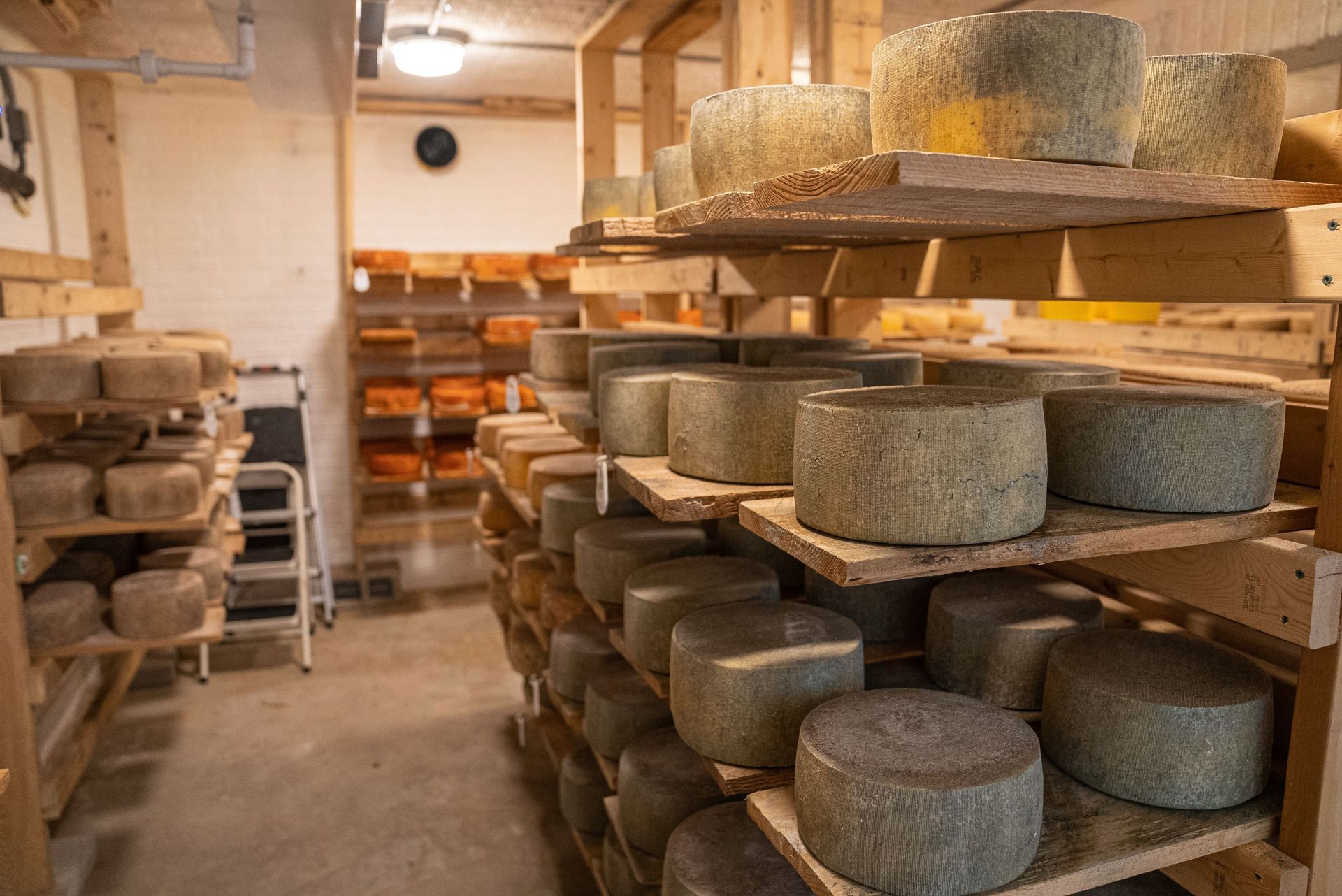
On the rind of a wheel of Parmigiano Reggiano sits a form of marketing that does not behave like marketing at all. It is legal identity. The DOP mark ties the cheese to a place, a method and a set of production rules that cannot be borrowed by an imitator with a similar wrapper and a sharper price.
For the UK premium cheese fixture, that matters. The most defensible products are often those that arrive with their own barrier to substitution, and protected Italian cheeses bring that defence with them. They carry culinary familiarity, export credibility and a price architecture that is not built solely by the retailer.
THE COMMERCIAL ROLE OF DOP
The European Commission’s geographical indication system protects product names where quality, reputation or characteristics are linked to place. For Italian cheese, the system is not an abstract badge. It is the mechanism that turns Parmigiano Reggiano, Grana Padano, Pecorino Romano, Gorgonzola, Taleggio and other regional cheeses into products whose names cannot simply be appropriated by lower-cost competitors.
Parmigiano Reggiano gives the category its clearest example: a hard cheese with high recognition, grating use and a strong culinary role beyond the cheeseboard. Grana Padano offers a more accessible DOP grating proposition. Pecorino Romano brings sheep’s milk, intensity and seasoning power. Together they show how Italian protected cheeses can defend value while still meeting everyday cooking occasions.
The protection also concentrates value. Within Italy’s certified food products, cheeses account for 60.8% of production value, and five of the country’s top 10 PDO and PGI foods are dairy — Grana Padano, Parmigiano Reggiano, Mozzarella di Bufala Campana, Gorgonzola and Pecorino Romano — worth a combined €4.8 billion, according to the 2026 strategic report The Italian Dairy System – Sustainable Value for the Country, produced by TEHA Group with Assolatte and presented on 18 June 2026.
WHAT THIS MEANS FOR THE UK FIXTURE
That strength already lands on British shelves. Trade data put Italian cheese exports to the UK above €400 million a year, on more than 46,000 tonnes, making Britain one of the most important European destinations for Italian dairy. The same data place Italy at around 11% of UK cheese imports by volume but close to 17% by value - a gap that reflects Italian cheese’s higher average price positioning rather than mere tonnage.
The categories carrying that value are familiar. Hard and aged cheeses lead, headed by Grana Padano PDO and Parmigiano Reggiano PDO; the Parmigiano Reggiano Consortium reports UK volumes growing steadily, above 8,400 tonnes a year. Fresh and cooking cheeses — mozzarella, buffalo mozzarella PDO and mascarpone - perform strongly across retail and foodservice alike, while Gorgonzola PDO and Pecorino Romano PDO hold their place among cheeses bought for a clear territorial identity.
THE UNDER-RANGED OPPORTUNITY
The opportunity is broader than the best-known names. Asiago DOP, Pecorino Toscano DOP, Provolone Valpadana DOP and Taleggio DOP each answer a different gap in the UK fixture: approachable mountain-style cheese, softer sheep’s-milk eating, slice-and-melt versatility, and washed-rind restaurant credibility. Gorgonzola Dolce can also occupy the spreadable-blue space for shoppers who want a gentler alternative to stronger British blues.
The article deliberately avoids an unsupported claim that UK retailers range only a fixed number of Italian DOP cheeses, or that named continental retailers carry two or three times as many. Those may hold in selected store checks, but they are not safe as national claims without a documented fixture audit. The safer conclusion is still strong, and the export data behind it stronger: UK premium grocery has room to make Italian protected cheese work harder across cooking, entertaining and smaller, higher-value portions.
WHY THIS FITS THE 2026 SHOPPER
Italian protected cheeses are not tied to a single eating occasion. They move between scratch cooking, aperitivo, pasta, salads, sandwiches, pizza, premium snacking and foodservice-inspired home dining. That versatility gives the buyer more than a heritage story. It gives rotation.
The strongest case for ranging more of them is not sentiment. It is that protected cheeses help a premium retailer make a promise the discounter cannot easily copy: named origin, regulated method and a recognised culinary role. For producers and consortia exhibiting at ICDA EXPO, the task is to turn that legal protection into a practical category argument that sets out which occasion the cheese owns, which shopper it recruits, and how it grows value without adding confusion.
“The DOP mark is not decoration. Used properly, it is a commercial defence mechanism.”
For buyers, the next move is disciplined expansion rather than indiscriminate range-building. The fixture does not need every Italian cheese. It needs the right protected cheeses, with the right usage cues, at the right price points. That is where provenance becomes commercial.
SOURCE NOTE FOR PRODUCTION
- European Commission guidance on geographical indications and protected designations.
- Italian DOP cheese names verified through EU/consortia naming convention.
- TEHA Group with Assolatte, 2026 strategic report ‘The Italian Dairy System – Sustainable Value for the Country’, presented 18/06/2026: system turnover €31.9bn (industry €28.5bn); added value €6.4bn; exports €6.7bn, +13.6% on 2024; second-largest cheese exporter globally (14% share); dairy 9.4% of agri-food exports; cheeses 60.8% of certified-food production value; five of top 10 PDO/PGI foods are dairy, combined €4.8bn; six of world’s 15 most-appreciated cheeses Italian, 26 in top 100. Headline figures corroborated by Assolatte/Il Sole 24 Ore trade reporting
- Parmigiano Reggiano Consortium: UK exports growing steadily, above 8,400 tonnes a year (consortium reported 8,400 t / +7.8% in 2025).
- UK trade figures (Italian cheese exports >€400m and >46,000 t to the UK; ~11% of UK cheese imports by volume, ~17% by value) supplied as industry/trade data. CONFIRM the underlying dataset (e.g. HMRC/Eurostat/ISMEA) and the reference year before print. Figures in euros
- European Commission guidance on geographical indications and protected designations.
More news and insight