THE RETURN OF FAT: HOW JERSEY MILK SIGNALS A STRUCTURAL SHIFT IN DAIRY DEMAND
A new generation of health-led consumers, amplified by social media and shifting nutrition science, is quietly reshaping value, perception and pricing power across the dairy category
For much of the past half-century, the trajectory of the dairy aisle appeared settled. Fat was the problem, reformulation the solution, and consumer virtue neatly colour-coded in green, red and blue caps. What is now unfolding, however, suggests something more structurally significant than a passing preference shift. The resurgence of full-fat dairy - and, more pointedly, the sharp rise in demand for Jersey milk - signals a recalibration of how consumers interpret health, value and authenticity in food.
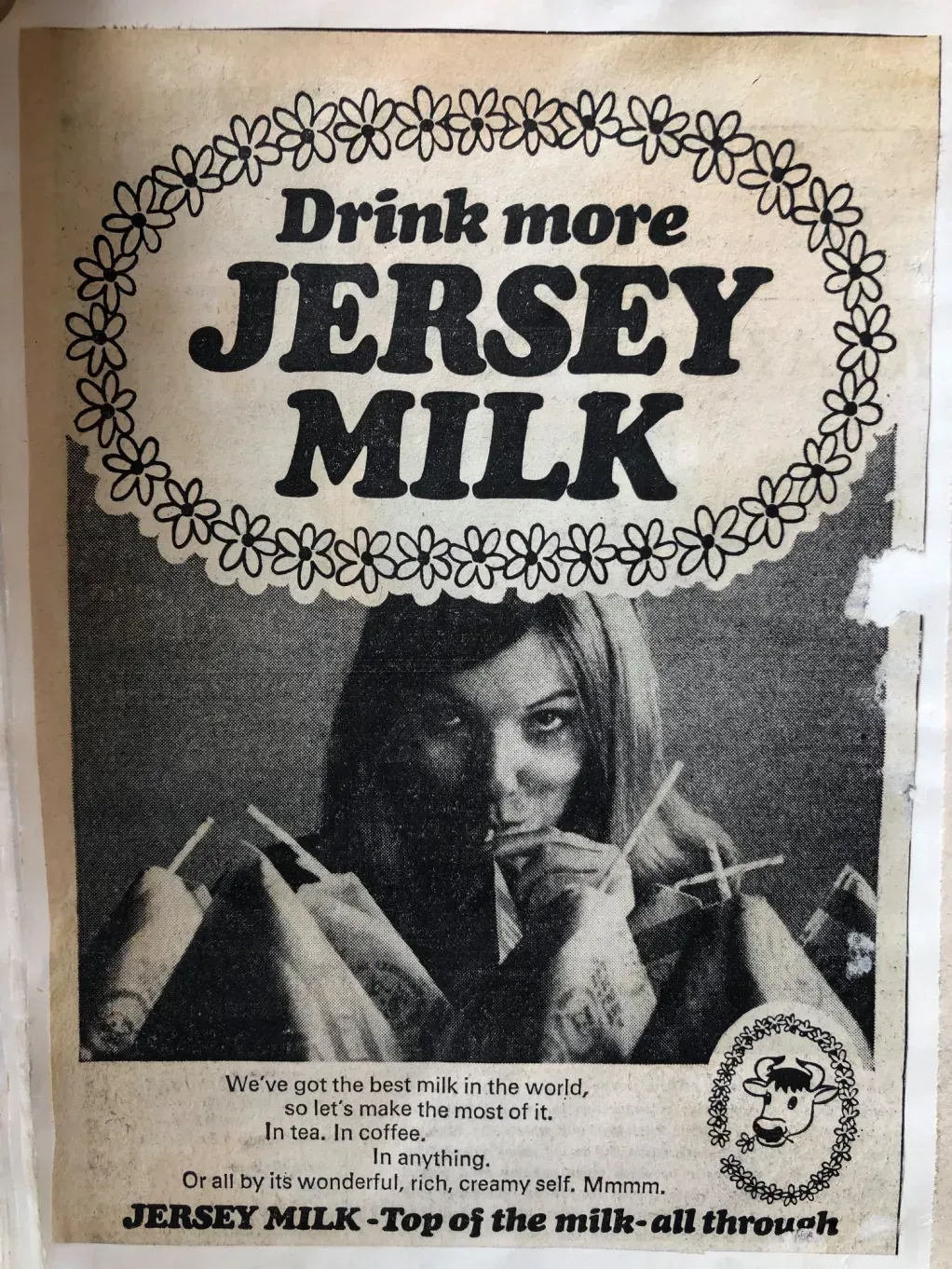
Recent data points are striking. Sales of butter rising by double digits, whole milk returning to growth, and Jersey milk - a product long confined to a premium niche - reportedly experiencing its strongest demand in half a century. Producers such as Graham’s have seen sales accelerate markedly, while retailers including Tesco point to a new cohort of younger consumers actively seeking out higher-fat dairy products. On the surface, this looks like a reversal of decades of dietary orthodoxy. Beneath it sits a more complex set of incentives and signals.
At the consumer level, the shift is less about indulgence than it is about reframing function. Protein has become the dominant organising principle of modern food choice, cutting across categories from dairy to snacks to beverages. In this context, full-fat dairy benefits from a form of nutritional reclassification. It is no longer judged solely through the lens of saturated fat, but as part of a broader matrix that includes protein density, micronutrients and perceived naturalness.
This is where Jersey milk finds its moment. Its compositional advantages - higher protein, elevated calcium, richer mouthfeel - align neatly with the emerging definition of “naturally functional” foods. It delivers both sensory reward and nutritional justification, a combination that few categories manage to balance effectively. In economic terms, it also offers something the wider liquid milk market has struggled with for years: a credible premium narrative.
Yet to view this purely through the lens of nutrition would be to miss a critical driver. The velocity of the shift owes as much to media dynamics as to metabolic science. Social platforms, particularly TikTok and Instagram, have become powerful intermediaries in shaping food credibility. Influencers reframing whole milk as beneficial for skin, gut health or satiety are not simply amplifying existing trends - they are accelerating adoption curves.
Yet to view this purely through the lens of nutrition would be to miss a critical driver. The velocity of the shift owes as much to media dynamics as to metabolic science. Social platforms, particularly TikTok and Instagram, have become powerful intermediaries in shaping food credibility. Influencers reframing whole milk as beneficial for skin, gut health or satiety are not simply amplifying existing trends - they are accelerating adoption curves.

For the dairy industry, this creates both opportunity and risk. On one hand, it provides a rare moment where category perception is improving without the need for heavy reformulation or marketing spend. On the other, it introduces a volatility that traditional dairy businesses are not structurally designed to manage. Demand driven by social validation rather than embedded habit can prove transient, particularly when the underlying claims sit in the ambiguous territory of nutrition science.
The scientific backdrop itself remains nuanced. The dismantling of the low-fat orthodoxy has been gradual, driven by longitudinal studies suggesting that full-fat dairy does not correlate with the negative health outcomes once assumed. More importantly, it reflects a growing recognition that food matrices matter - that dairy cannot be reduced to its fat content in isolation. This has allowed products like cheese, yoghurt and whole milk to re-enter the conversation without the stigma attached to saturated fat in previous decades.
However, nuance rarely travels well in consumer discourse. What begins as a correction to oversimplified dietary guidance can quickly become an overcorrection in the opposite direction. For processors and retailers, the strategic question is not whether full-fat dairy is “back”, but how durable and scalable this shift is likely to be.
From a supply-side perspective, Jersey milk presents its own constraints. Herd composition, yield characteristics and processing requirements limit the speed at which production can expand. Unlike standard milk, this is not a segment that can be rapidly scaled without capital investment and longer-term planning. If demand continues to outpace supply, the category risks reinforcing its position as a premium niche rather than transitioning into a broader growth driver.
For retailers, the implications are more immediate. Margin structures in liquid milk have been under sustained pressure for years, with price competition eroding value across the fixture. A sustained move towards premium, differentiated milk products offers a route to rebuild category economics. The question is whether they are willing to support that shift through ranging, merchandising and pricing strategy, or whether promotional dynamics will once again compress value.
There is also a broader signal here for the dairy portfolio beyond milk. The concurrent rise in products such as Greek yoghurt, kefir, cottage cheese and fortified dairy drinks points to a category that is increasingly being organised around function rather than format. Dairy’s competitive set is no longer confined to itself; it sits alongside protein bars, supplements and plant-based alternatives all vying for the same nutritional territory.
In that context, the revival of full-fat dairy is not simply about reversing past narratives. It is about repositioning dairy within a more complex, health-oriented food system where consumers are assembling diets based on perceived outcomes - energy, satiety, gut health, longevity - rather than macronutrient avoidance.
What is emerging, then, is less a nostalgic return to gold-top milk and more a redefinition of dairy’s role in the modern diet. The industry has, perhaps unexpectedly, been handed a narrative tailwind. The more pertinent question is whether it has the strategic alignment to convert that tailwind into sustained value creation, or whether it will once again allow structural constraints - pricing pressure, fragmented messaging, inconsistent innovation - to dilute the opportunity.
Because if this moment tells us anything, it is that consumer perception of dairy is not fixed. It is fluid, contested and increasingly shaped outside the industry’s traditional channels of influence. And in that environment, the winners will not be those who simply benefit from the cycle turning, but those who understand why it is turning - and what it will take to keep it moving in their favour.
The resurgence of full-fat dairy, led by the unexpected momentum behind Jersey milk, raises a set of more strategic questions for the industry than the headline figures alone suggest. Is this the beginning of a sustained premiumisation of liquid milk, or a short-cycle demand spike driven by social media and shifting dietary narratives?
Can processors and retailers structurally capture value from this shift, or will legacy pricing dynamics erode the opportunity once again? And, perhaps more critically, does this signal a broader repositioning of dairy as a “naturally functional” category competing beyond its traditional boundaries?
These are not just observations to note, but lines of enquiry that will shape the next phase of analysis - from supply constraints and herd strategy, to retail execution, brand positioning and the long-term credibility of dairy’s health narrative.
More news and insight